
The Scandalous Truth Behind America's First Bestseller
Historian Monica Najar unravels the sensational 19th century book "Awful Disclosures of Maria Monk" and its anti-Catholic and gendered politics
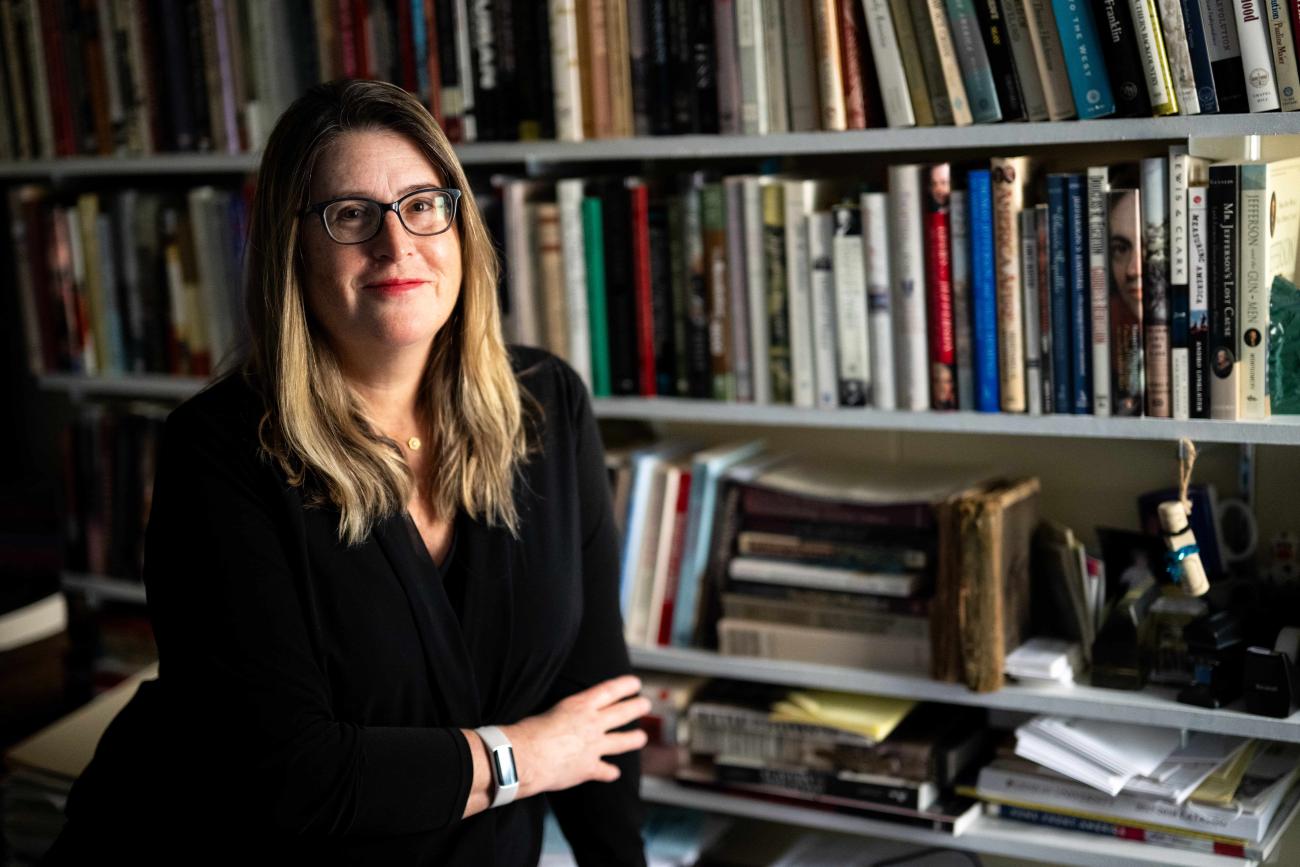
Historian Monica Najar has spent many years unraveling one of the most sensational and misunderstood stories in American publishing history — the tale of Maria Monk, whose lurid 1836 account of convent life became a 19th-century bestseller. It told shocking stories of sexual assault, murder and abuse inside a Montreal convent, stories that helped fuel anti-Catholic sentiment in America for generations. But Monk herself — a 19-year-old pregnant woman who arrived in the United States from Montreal — was most likely never the convent and she died penniless in a poorhouse, never profiting from her own narrative.
The book, Awful Disclosures of Maria Monk, sold 300,000 copies before 1860 and continued to be reprinted well into the 20th century. Monk made sensational accusations that during her time as a nun at Montreal's Hôtel-Dieu, she had been forced by church authorities to participate in horrific acts including the murder of a fellow nun who refused priests' immoral demands. Capitalizing on intense anti-Catholic sentiment, newspapers and New York editors promoted Monk's allegations as exciting "true" revelations about convent life.
When the very pregnant Monk took refuge in the Bellevue Almshouse in 1835, she had nothing but a salacious story to tell. But a host of anti-Catholic and anti-immigrant men saw her narrative as opportunity to convince Americans of the threat of Catholicism—and to make a lot of money for themselves as they did so. Collectively, these men and Monk worked to produce a book they could publish and that would excite a purchasing public, eager for scandal, despite the big holes in her story.
"She tells this story of the nunnery soon after coming to this country, but this group of men-on-the-make come in, and they take over the process. Critics would call her a thief, but they took her story, took the copyright, and took the profits,” says Najar, professor of history and women, gender, and sexuality studies. “They sometimes even took control of her. It was very clear this book was going to make money in the months before it was published. And so, Monk became a pawn as different factions tried to get control of the project. They start hiding her, in a boarding house, in a basement, and even in New Jersey. The book does in fact make a considerable amount of money. It secures the fortunes of many men and different publishers, and it helps establish the famous penny presses in the 1830s.”
A Political Weapon
Najar’s research offers a compelling look at the multifaceted ways gender influenced life and politics in the early 19th century. Najar’s book reveals how gender operated to shape crucial areas, including women's participation in politics, their centrality to the developing economy of celebrity and scandal, their lack of control over their own bodies, and their access to the works they created, whether factual or fictional.
The political context matters deeply. The 1830s marked the rise of Jacksonian democracy, when voting rights expanded to include poor, working-class men — including Catholics. For some Protestant Americans, this represented a terrifying loss of control.
"It's no longer an expectation that the "right people" were guiding the government," Najar said. "Now, you have to trust the man you don't know, and he might be poor, and he might be a laborer, and he might be Catholic. That raised all kinds of questions for some Americans at this time."
Anti-Catholic activists leveraged this fear by making it personal — framing the Pope's supposed threat to democracy through the story of a vulnerable woman in danger. "The idea of a woman captive in a convent becomes a stand-in for the threat to democracy," Najar notes.
Truth, Fiction and Exploitation
Najar is careful about the question of truth. While she found no evidence Monk was ever a novice or a nun in a convent — "she just didn't know enough about convents" — the historian acknowledges the historical reality of sexual abuse by clergy. Monk's sensational story later helped people dismiss sexual abuse by clergy as just "another Maria Monk story."
"I am very careful not to say it's not true, because it could well have been true for someone else," Najar said. "History tells us that, there were accusations like this against ministers everywhere, including the Catholic Church."
With one chapter remaining to write, Najar’s project grew from what was meant to be a single chapter into a full book. Najar first learned about Monk as a college freshman, when a professor described how mobs burned a convent school with children inside, attempting to "save" the women within — a savior complex requiring "some psychological investigation."
After writing a college paper on the topic, Najar moved on to other work, only to return years later. "I just got so interested in her and in the ethics — the ethics of what happened around her, and the ethics of my responsibility as a historian returning to this story."
That ethical responsibility extends to recovering the humanity of a woman the internet still treats as either a villain or a curiosity. After years of unraveling this sensational and misunderstood story, Najar admits she feels "quite close" to this project. "This book will be Monk's story. That's hard to find on the internet if you look at it." The tale that began with a pregnant 19-year-old arriving from Montreal and ended with her dying penniless in a poorhouse still has more to reveal — about who profits from women's celebrity and scandal, and who pays the price.